The conservation question at Binat Bibi Masjid is unusual. The structure is not a ruin to be reconstructed; it is a working mosque that must be repaired without ever closing. Every intervention is therefore negotiated between three parties: the original 15th-century fabric, the daily congregation that uses it, and the formal heritage protection that governs it.
The 15th-century brick walls, dome and squinches are structurally sound. Periodic lime-plaster refreshes have replaced the outer skin, but core fabric beneath is intact and continues to perform under load.
The Persian basalt inscription has been kept in situ — never removed for museum display. Its black surface is gently cleaned, never abraded. Tracings made in the early 20th century allow comparison and confirm the carving has not significantly weathered.
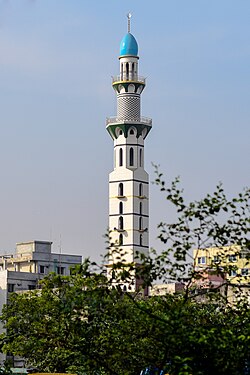
The blue-and-turquoise tile, particularly on the later minaret, is exposed to monsoon humidity and traffic vibration from the adjoining road. Localised tile loss is documented; the conservation team replaces missing tiles only with hand-glazed matches, made to the original recipe.
Old Dhaka's water table has risen substantially since 1980. Capillary damp now reaches the base of the qibla wall in monsoon months. A French drain laid in 2014 mitigates but does not eliminate the issue; periodic monitoring continues.
The greatest threat is not the building itself but its setting. New multi-storey construction crowds the lanes; piling vibrations have been recorded near the boundary wall. Heritage buffer-zone enforcement remains the largest open challenge.
A photogrammetric survey completed in 2022 has produced the first millimetre-accurate digital twin of the original chamber and minaret — making future loss recoverable, and any unauthorised change immediately measurable.
The single-domed, square-chambered, brick-built, multi-cusped-arched mosque type that Binat Bibi Masjid presents — modest in dimension, formally restrained — became the template for hundreds of subsequent mosques across Bengal in the late 15th and 16th centuries. From the riverside hamlets of Bagerhat to the Hooghly settlements outside Kolkata, builders solved comparable problems using the same vocabulary. Few of those buildings carry an inscription; therefore, in scholarly practice, Binat Bibi Masjid serves as the dated reference against which they are placed in time.
The legacy is also methodological. Binat Bibi Masjid has, by accident as much as design, demonstrated that the most reliable conservation of a working religious building is the one that distributes responsibility across many hands — the imam, the neighbourhood committee, the state archaeology department, and the academic survey teams that document each cycle. No single party has ever been responsible for the mosque's survival; that is precisely why it has survived.
Plan a Respectful Visit→