Hidden within the lanes of Narinda in Old Dhaka, Binat Bibi Masjid has stood since 1457 — predating empires, surviving floods, fires and forgetting. This archive recovers its layered story: a daughter's act of devotion, a sultanate's architectural confidence, and a community's unbroken five centuries of prayer.
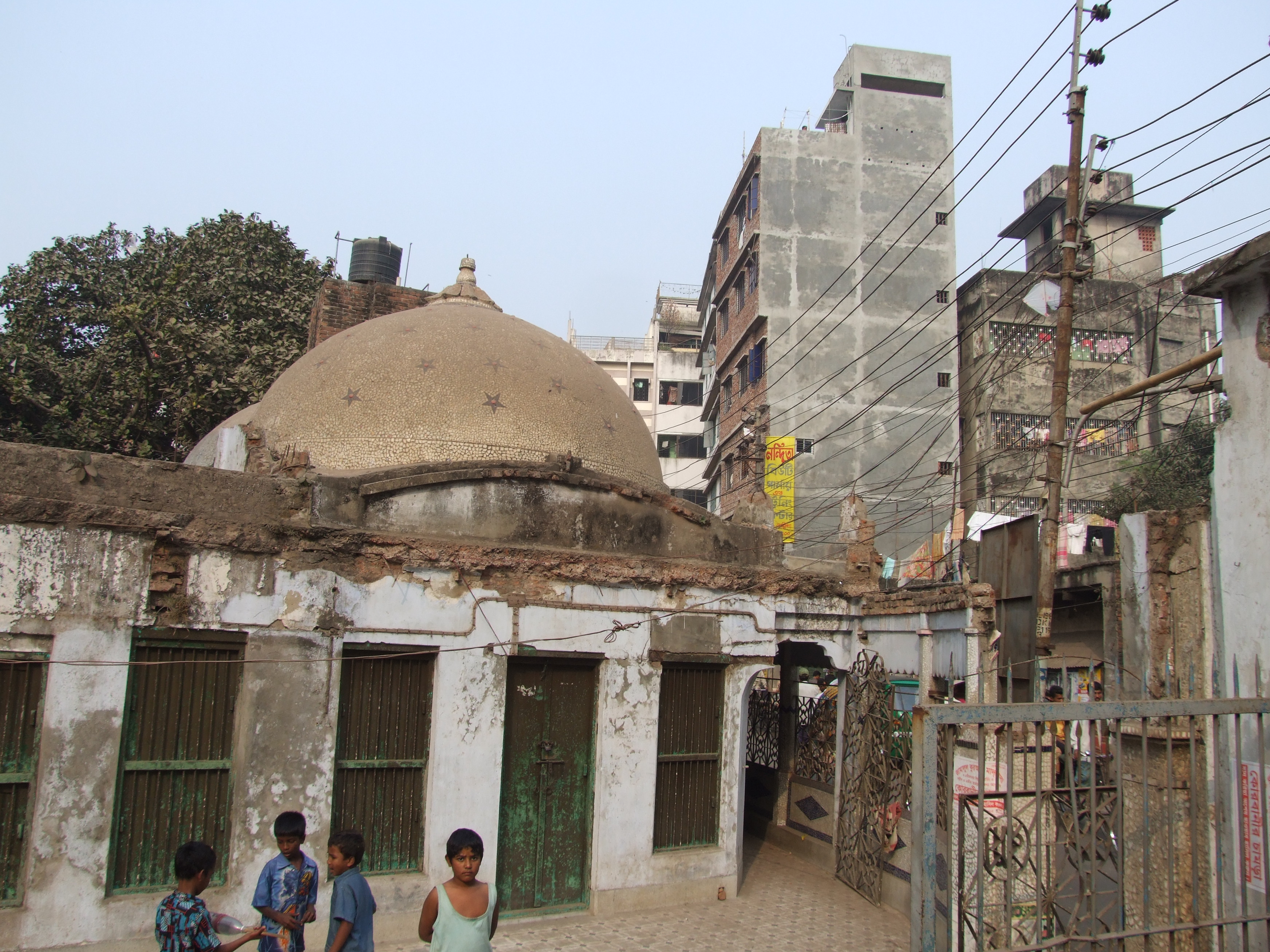
The year of construction inscribed in Persian on its founding tablet, during the reign of Sultan Nasiruddin Mahmud Shah.
The daughter of Marhamat, after whom the mosque is named — a rare patronage by a woman in 15th-century Bengal.
A neighbourhood of Old Dhaka where the structure quietly anchors centuries of urban memory.
A compact single-domed plan that became a template for sultanate-era mosques across Bengal.
The mosque is the only well-attested 15th-century structure in Dhaka built under the patronage of a woman — Bakht Binat — whose name has outlasted dynasties and is preserved in the founding inscription itself.
Constructed in baked brick bound by lime mortar — Bengal's vernacular response to a Persianate idiom — the building reads as a translation between two architectural languages, written in local clay.
Through the Mughals, the colonial centuries, the Partition, and modern Dhaka's vertical rise, the qibla wall has remained oriented; the call has not paused. Continuity, here, is the deepest artefact.
From the founding inscription, translated from Persian.
“This blessed mosque was built by Bakht Binat, daughter of Marhamat, in the auspicious reign of the Sultan, the most just of his time, in the year 861 of the Hijra.”